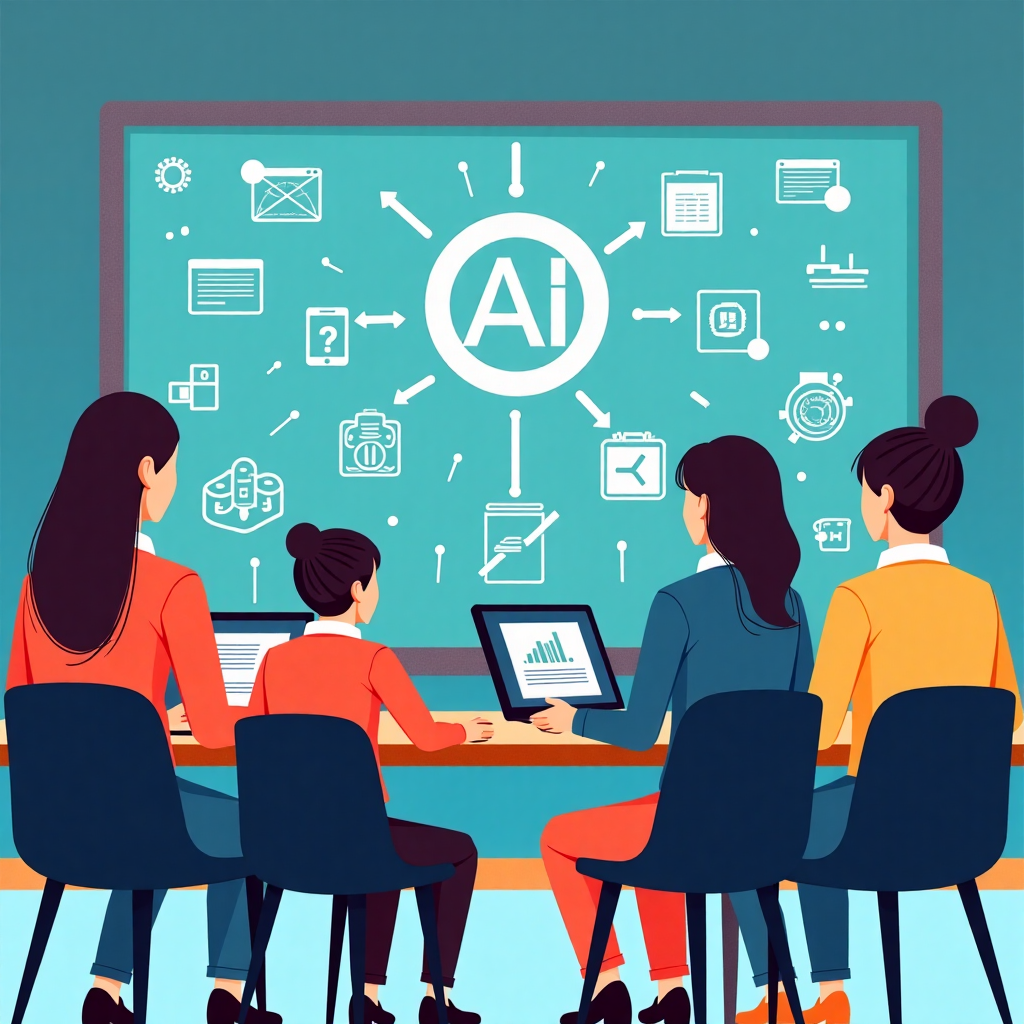
The scene is a familiar one: rows of desks, a teacher at the front, and students immersed in books or worksheets. But look closer. A student is quietly conversing with a chatbot to brainstorm an essay outline. Another receives instant, personalized feedback on a math problem from an adaptive learning platform. In the corner, the teacher reviews a dashboard that highlights which concepts the class is struggling with, allowing her to tailor tomorrow’s lesson in real time. This is not a scene from a sci-fi movie; it’s the evolving reality of education, powered by Artificial Intelligence (AI). After a decade of observing digital transformation, I’ve seen few technologies with the potential to impact learning as profoundly as AI. It’s moving beyond a buzzword to become a powerful ally, not to replace educators, but to empower them and personalize the journey for every single student.
The AI Toolkit: Practical Applications Transforming Learning Today
The true power of AI in education lies not in abstract promise, but in tangible, practical applications that are already being integrated into classrooms around the globe. These tools are shifting the focus from one-size-fits-all instruction to a more nuanced, responsive, and human-centric model of teaching and learning.
1. The Rise of Personalized Learning Pathways
For centuries, education has largely been a batch process. AI shatters this model by enabling truly personalized learning. Adaptive learning platforms use algorithms to analyze a student’s responses in real-time. If a student excels at fractions, the system presents more challenging problems or moves them ahead. If they struggle with decimal placement, it offers remedial exercises, alternative explanations, or helpful videos before they fall behind. This creates a custom curriculum for each learner, ensuring they are neither bored by material that’s too easy nor overwhelmed by concepts they’re not ready for. It’s the educational equivalent of a GPS, constantly recalculating the best route for each student to reach their destination.
2. Automating Administrative Tasks: Freeing Teachers to Teach
Ask any educator where their time goes, and a significant portion will be spent on tasks other than direct instruction: grading quizzes, taking attendance, drafting routine communications, and compiling data reports. AI-powered tools are stepping in as invaluable administrative assistants. Automated grading systems can handle objective assessments, freeing up hours for teachers to provide deeper, more meaningful feedback on essays and creative projects. AI can also draft personalized progress reports, manage scheduling, and even translate materials for multilingual classrooms. By automating the repetitive, we give teachers back their most precious resource: time to connect, mentor, and inspire.
3. Intelligent Tutoring and 24/7 Support
Imagine a tutor with infinite patience, available to every student at any hour of the day. AI-powered chatbots and tutoring systems are making this a reality. These “intelligent tutoring systems” (ITS) don’t just give answers; they guide students through the Socratic method, asking probing questions, offering hints, and breaking down complex problems into manageable steps. A student stuck on a homework problem at 8 PM can get immediate help, preventing frustration and keeping the learning momentum going. These systems provide a safe, judgement-free zone for students to ask questions they might be too shy to voice in a full classroom.
4. Unleashing Creativity and Critical Thinking
Far from stifling creativity, AI can be a powerful catalyst for it. In the writing process, tools like AI assistants can help students overcome the fear of the blank page by generating prompts, suggesting outlines, or offering vocabulary enhancements. In art and design classes, generative AI can help visualize concepts, experiment with styles, and understand composition. Crucially, this shifts the teacher’s role to that of a coach guiding students on how to critically evaluate, refine, and ethically use AI-generated content. The focus becomes less on rote production and more on analysis, editing, and original synthesis—the higher-order skills that truly matter.
Navigating the Challenges: Ethics, Equity, and the Human Element
As with any transformative technology, the integration of AI into classrooms is not without its significant challenges and ethical dilemmas. Ignoring these concerns would be a disservice to the promise of the technology. A thoughtful, proactive approach is required to ensure AI serves as a force for equitable good.
- Data Privacy and Security: AI systems thrive on data. Protecting the sensitive information of minors—their learning patterns, biometric data, and personal details—is paramount. Schools and developers must implement robust security measures and maintain absolute transparency about how student data is collected, used, and stored.
- Algorithmic Bias and Equity: AI models are trained on existing data, which can perpetuate and even amplify societal biases. An AI tool might unintentionally steer girls away from STEM recommendations or misunderstand the cultural context of a student’s work. Vigilant auditing for bias and a commitment to diverse training datasets are non-negotiable to prevent creating a new digital divide.
- The Imperative for Human Connection: Education is fundamentally a human endeavor rooted in relationships, empathy, and social-emotional learning. No AI can comfort a struggling child, spark a passionate debate, or recognize the unspoken anxiety in a student’s eyes. The goal must be AI augmentation, not replacement. The teacher’s role evolves to curator of technology, facilitator of discussion, and mentor of the whole child.
- Developing Critical AI Literacy: We must teach students not just how to use AI, but how to understand it. This means integrating lessons on how AI works, its limitations, how to spot misinformation or deepfakes, and the ethical implications of its use. Students must graduate as informed digital citizens.
The Future Classroom: A Collaborative Ecosystem
So, what does the classroom of the near future look like? It is a collaborative ecosystem—a dynamic blend of human intelligence and artificial intelligence. The teacher is the conductor of an orchestra of tools and minds, using AI-driven insights to identify needs and craft impactful group activities, projects, and discussions that only humans can lead. Students move fluidly between AI tutors for skill mastery and peer groups for collaborative problem-solving. Assessment becomes more holistic, leveraging AI to track progress on competencies while teachers evaluate creativity, collaboration, and character.
This future is not about screens replacing human interaction; it’s about using technology to make the time spent together more meaningful. It’s about ensuring that a teacher’s expertise is directed toward the moments that matter most: the “aha!” moment of understanding, the encouragement after a failure, and the nurturing of curiosity.
Conclusion: A Partnership for Potential
The integration of AI into the classroom is not a question of “if” but “how.” The narrative should not be one of fear, but of thoughtful partnership. When implemented with care, ethics, and a clear focus on enhancing human connection, AI holds the key to unlocking unprecedented levels of personalized learning, emancipating teachers from administrative burdens, and equipping students with the critical skills they need for a world where AI is ubiquitous. The chalkboard may be fading, but the fundamental mission of education—to illuminate minds and empower individuals—remains brighter than ever. Our task is to wield this new tool not as a master, but as a partner, ensuring it serves our deepest educational values and helps every learner reach their full, unique potential.