The phrase “smart casual” often lands in inboxes and employee handbooks, causing more confusion than clarity. Is it jeans? Is it a suit without the tie? The ambiguity leaves many professionals scratching their heads, unsure if their outfit hits the mark or misses it entirely. Yet, getting smart casual right is a crucial skill in today’s evolving work environment. It strikes a balance between professionalism and comfort, projecting competence while allowing for a degree of personal style. Whether you’re navigating a hybrid schedule, attending a client lunch, or working in a creative agency, understanding and mastering smart casual attire empowers you to feel confident and make a positive impression. This guide delves deep into the nuances of smart casual for work, providing practical insights and actionable tips to help you build a versatile and polished wardrobe.
Decoding the Dress Code: What Exactly is “Smart Casual”?
The challenge with “smart casual” lies in its inherent subjectivity. Unlike “business formal” (think suits and ties) or “business casual” (dress pants and button-downs), smart casual occupies a middle ground that can vary significantly depending on your industry, company culture, geographic location, and even the specific day’s agenda. At its core, smart casual is about looking polished, put-together, and intentional without being overly formal or rigid. It blends elements of traditional business wear with more relaxed, contemporary pieces.
Key Characteristics of Smart Casual Attire
Think of smart casual as elevating your best casual pieces while softening your formal ones. Here are its defining traits:
- Polished Presentation: Clothes should be clean, well-fitted, pressed or steamed, and free of rips, stains, or excessive wear.
- Quality Fabrics: Opt for materials that look substantial and refined – think cotton, wool, linen, silk, chinos, well-structured knits, and leather. Avoid overly casual fabrics like terry cloth, thin jersey, or distressed denim (unless explicitly acceptable in your workplace).
- Tailoring Matters: Fit is paramount. Pieces shouldn’t be baggy or overly tight. Even casual items benefit from being tailored to your body.
- Balance is Key: The essence is in pairing. Combine a more relaxed item with something more structured. For example, pair tailored trousers with a crisp knit top, or dark denim with a blazer.
- Footwear Focus: Shoes can make or break the look. Lean towards loafers, oxfords, brogues, clean sneakers, ankle boots, or elegant flats. Avoid flip-flops, overly worn sneakers, or beach sandals.
What Smart Casual is NOT
Equally important is understanding what falls outside the smart casual realm:
- It’s not Weekend Casual: Leave the graphic tees, athletic wear (unless it’s a very specific active workplace), ripped jeans, shorts, and flip-flops at home.
- It’s not Full Business Formal: While elements like blazers are welcome, the full suit-and-tie combo is usually too formal for a smart casual designation.
- It’s not Sloppy: Wrinkled, stained, or ill-fitting clothes, regardless of the individual pieces, do not qualify as smart casual.
Building Your Smart Casual Wardrobe: Essential Pieces
Creating a versatile smart casual work wardrobe doesn’t require a complete closet overhaul. Focus on acquiring high-quality foundational pieces that can be mixed and matched effortlessly.
The Foundation: Bottoms
Your choice of bottoms sets the tone:
- Tailored Trousers/Chinos: These are the workhorses. Opt for neutral colors like navy, grey, khaki, black, or olive. Choose a flat front and a fit that skims the body without being tight. Wool blends, cotton twill, or structured synthetics are excellent choices.
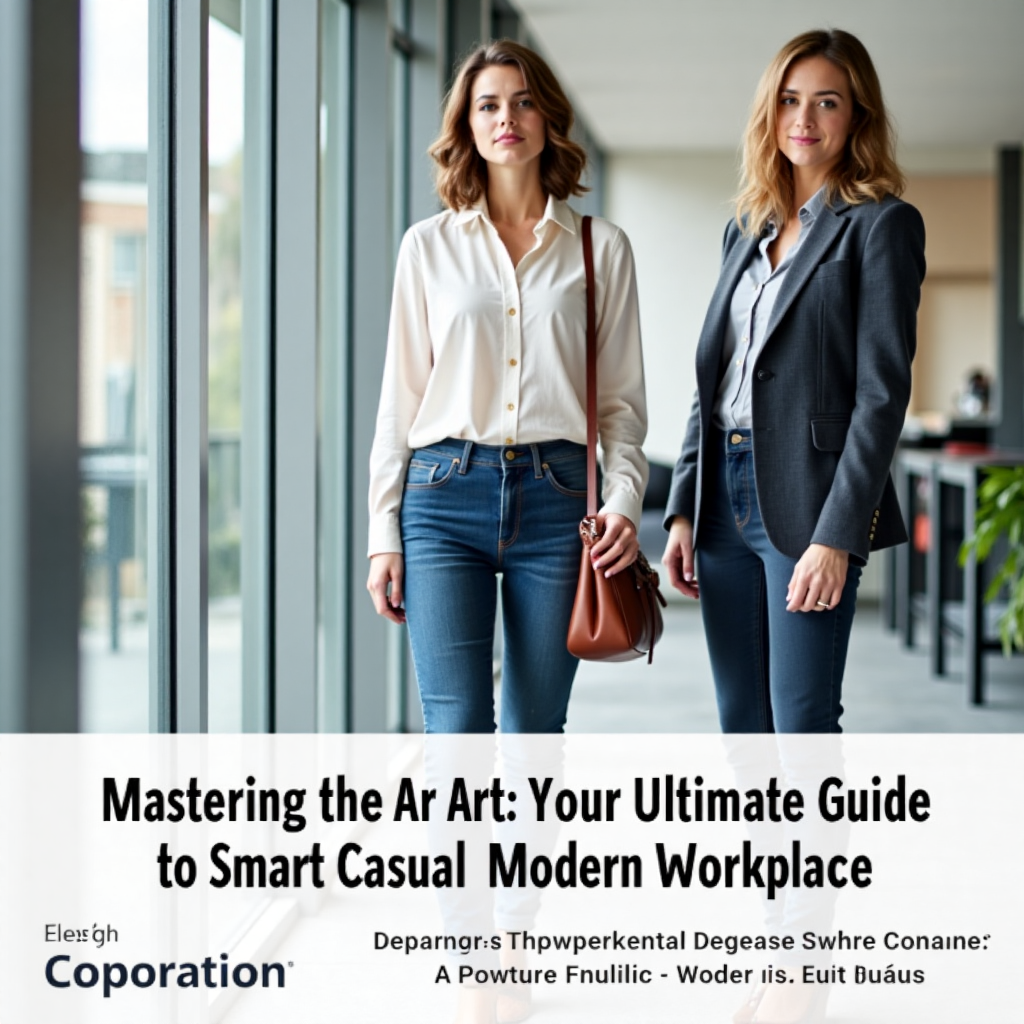
- Dark Denim: A dark wash (indigo or black) without distressing, fading, or embellishments is often acceptable. Ensure they are well-fitting – not skinny, not baggy. A straight or slim leg is usually safest.
- Midi Skirts/Dresses: For a polished yet approachable look, a well-cut midi skirt or dress in a solid color or subtle pattern works beautifully. Pair with knit tops, blouses, or structured cardigans.
- Tailored Shorts (Seasonal/Culture Specific): In warmer climates or very casual workplaces, tailored shorts (like chino shorts) in a modest length (around knee-length) can sometimes work, but always pair them with more elevated tops and footwear.
The Core: Tops
Tops offer the most opportunity to express personal style while maintaining professionalism:
- Crisp Button-Downs: A classic choice. Cotton or linen shirts in white, blue, or subtle patterns (like stripes or checks) are incredibly versatile. Tuck them in or wear them untucked if the hem is designed for it and looks neat.
- Polished Knitwear: Think fine-gauge merino wool sweaters, cotton or silk blends, or structured knit tops (like a ponte knit shell or sweater). Avoid bulky, oversized knits or anything with a prominent logo.
- Blouses: Silk, satin, or high-quality synthetic blouses add a touch of elegance. Choose styles that aren’t overly sheer or revealing.
- Polo Shirts: A collared polo shirt in pique cotton or a nice knit can be a smart casual staple, especially in less formal settings.
- Quality T-Shirts: A plain, well-fitting t-shirt in a solid color (white, black, navy, grey) made from a substantial fabric (like cotton jersey or a cotton blend) can work well under a blazer or cardigan.
The Elevator: Layers and Outerwear
Layers add depth, interest, and can instantly elevate an outfit:
- Blazers/Sport Coats: The quintessential smart casual layer. Opt for unstructured styles in cotton, linen, tweed, or wool blends. Navy, grey, and tan are universally flattering. Can be worn over dresses, tops, or even with dark jeans.
- Cardigans & Knit Blazers: A fine-gauge merino cardigan or a structured knit blazer offers a softer alternative to traditional blazers.
- Vests (Waistcoats): A sleeveless layer can add sophistication over a shirt or fine-knit top.
- Structured Jackets: A trench coat, a well-cut leather jacket (in black or brown), or a wool pea coat can be smart casual outerwear options.
The Finishing Touches: Footwear and Accessories
These elements complete the look and demonstrate attention to detail:
- Footwear: As mentioned, this is critical. Choose:
- Loafers (leather or suede)
- Oxfords or Derbies (less formal than full business shoes)
- Brogues
- Clean, minimalist sneakers (white leather, black leather)
- Ankle boots (chelsea boots or lace-ups)
- Elegant flats or low block heels
Ensure they are clean and in good condition.
- Accessories: Use sparingly to enhance, not overwhelm:
- A leather belt that matches or complements your shoes.
- A simple watch.
- Subtle jewelry (stud earrings, a delicate necklace, a simple bracelet).
- A quality leather bag or briefcase.
- A pocket square for blazers (optional).
Smart Casual Across Industries: It’s Not One-Size-Fits-All
A tech startup in Silicon Valley will interpret smart casual very differently from a law firm in London or an advertising agency in New York. Understanding your specific work environment is key.
Traditional Industries (Finance, Law, Consulting)
In these sectors, smart casual often leans closer to business casual. Expectations are higher:
- Bottoms: Tailored trousers or skirts are preferred. Dark denim might be acceptable only on designated casual days, if at all.
- Tops: Button-down shirts, blouses, and polished knitwear are staples. T-shirts are less common.
- Layers: Blazers are frequently expected or strongly encouraged.
- Footwear: Loafers, oxfords, brogues, or elegant heels are the norm. Sneakers are rarely appropriate unless very discreet.
When in doubt, err on the side of slightly more formal. Observe what senior leaders wear.
Creative Industries (Tech, Advertising, Media, Design)
These environments often embrace a broader interpretation of smart casual, allowing for more personal expression:
- Bottoms: Dark, well-fitting jeans are widely accepted. Tailored trousers, chinos, and skirts are also common.
- Tops: A wider range is possible – button-downs, polos, high-quality t-shirts, sweaters, and more unique blouses.
- Layers: Blazers, cardigans, vests, or even stylish hoodies (in very casual settings) might be seen.
- Footwear: Clean sneakers are often perfectly acceptable alongside loafers, boots, and flats.
The focus remains on looking intentional and put-together, even if the individual pieces are more relaxed.
Customer-Facing Roles and Client Meetings
Regardless of your industry standard, always elevate your smart casual look when meeting clients or external stakeholders. This shows respect and professionalism. Opt for:
- Tailored trousers or a skirt over jeans.
- A button-down shirt or elegant blouse.
- A blazer.
- Polished leather shoes.
- Minimal, sophisticated accessories.
Think of it as your “best” smart casual.
Avoiding Common Smart Casual Pitfalls
Even with the best intentions, it’s easy to stumble. Here are frequent mistakes to watch out for:
The “Too Casual” Trap
- Worn-Out Items: Faded t-shirts, jeans with holes or excessive fading, scuffed shoes.
- Athleisure Creep: Yoga pants, joggers, hoodies (unless it’s a very specific culture), athletic sneakers worn for sports.
- Beach Vibes: Flip-flops, shorts, overly casual sandals, tank tops.
- Ill-Fitting Clothes: Anything too baggy, too tight, or dragging on the floor.
The “Too Formal” Misstep
- Full Suit & Tie: Unless it’s a formal event, this can look out of place in a smart casual setting and might make colleagues feel underdressed.
- Overly Structured Suiting: Very stiff, traditional suit jackets can feel too formal when paired with casual bottoms.
The “Mismatched” Look
- Failing the Balance Test: Pairing two overly casual items (e.g., graphic tee and ripped jeans) or two overly formal items without softening them.
- Ignoring Context: Wearing something appropriate for a creative agency to a conservative bank meeting.
Putting it All Together: Smart Casual Outfit Ideas
Here are a few examples to inspire your smart casual combinations:
Classic and Versatile
- Men: Navy chinos + Light blue button-down shirt (tucked or neatly untucked) + Brown leather loafers + Optional: Navy cotton blazer.
- Women: Black tailored trousers + White silk blouse + Black leather ankle boots + Optional: Structured black cardigan.
Elevated Denim
- Men: Dark wash straight-leg jeans + Grey merino wool sweater + Tan suede desert boots + Optional: Navy unstructured blazer.
- Women: Dark wash skinny or straight-leg jeans + Crisp white button-down shirt (tucked) + Black leather loafers + Statement necklace.
Polished Knitwear Focus
- Men: Grey wool trousers + Navy fine-gauge v-neck sweater + White button-down shirt (collar visible) + Brown oxford shoes.
- Women: Midi pencil skirt (e.g., navy) + Cream cashmere crewneck sweater + Nude pointed-toe flats + Delicate gold bracelet.
The “Clean Sneaker” Look (Industry Dependent)
- Men: Olive chinos + Navy polo shirt + Crisp white leather sneakers.
- Women: Black ponte knit pants + Striped Breton top + White leather sneakers + Black leather crossbody bag.
Conclusion: Confidence is the Best Accessory
Mastering smart casual for work is less about rigid rules and more about understanding the principles of polished, intentional dressing within the context of your specific workplace. It’s a valuable skill that allows you to navigate diverse professional situations with ease, projecting competence and confidence. By investing in quality foundational pieces, paying attention to fit and fabric, and observing the norms of your environment, you can build a versatile smart casual wardrobe that works for you. Remember the core tenets: balance relaxed pieces with structured ones, prioritize quality and fit, and choose footwear wisely. Most importantly, wear your clothes with confidence. When you feel comfortable and look put-together, that self-assuredness becomes the most powerful element of your professional presence. Dressing smart casual shouldn’t be a source of stress; it should be an opportunity to express your professionalism and personal style seamlessly.