You’ve received an invitation marked “Cocktail Attire.” A wave of panic sets in. What does it *really* mean? Is it a floor-length gown? A suit and tie? Something in between? You’re not alone. The cocktail dress code is one of the most common, yet often misunderstood, sartorial requests. It sits comfortably between casual and ultra-formal, offering a sweet spot of sophisticated style. But navigating its nuances can feel like deciphering a secret code. Fear not! This guide, drawing on years of observing and writing about fashion etiquette, will demystify the cocktail dress code, ensuring you arrive at your next event looking polished, appropriate, and utterly confident.
The Essence of Cocktail Attire: Where It Came From and What It Means Today
The term “cocktail attire” has its roots in the mid-20th century, specifically the post-World War II era. As social gatherings evolved, a new type of event emerged: the cocktail party. These were typically evening affairs, starting around 5 or 6 PM and ending before dinner, centered around drinks and hors d’oeuvres. They provided a sophisticated alternative to formal dinners or balls. Naturally, a specific dress code developed for these occasions – something elegant but not overly stuffy, dressy but not requiring a full tuxedo or ball gown. This became known as cocktail attire.
Today, the cocktail dress code remains incredibly popular for a wide range of events:
- Wedding Receptions (especially evening ones)
- Holiday Parties
- Gallery Openings
- Fundraising Galas (sometimes)
- Sophisticated Birthday Celebrations
- Engagement Parties
- Anniversary Parties
- Premieres and Awards Ceremonies (depending on the event)
At its core, cocktail attire signifies dressy, sophisticated, and polished. It’s about elevating your everyday look significantly. Think of it as the “best version” of semi-formal. The key is to strike a balance: avoid being too casual (jeans, t-shirts, overly revealing clubwear) but also avoid the full regalia of black-tie events (floor-length gowns, tuxedos unless specified). It’s the perfect opportunity to showcase personal style within a framework of elegance.
Decoding Women’s Cocktail Attire: Dresses, Separates, and Sparkle
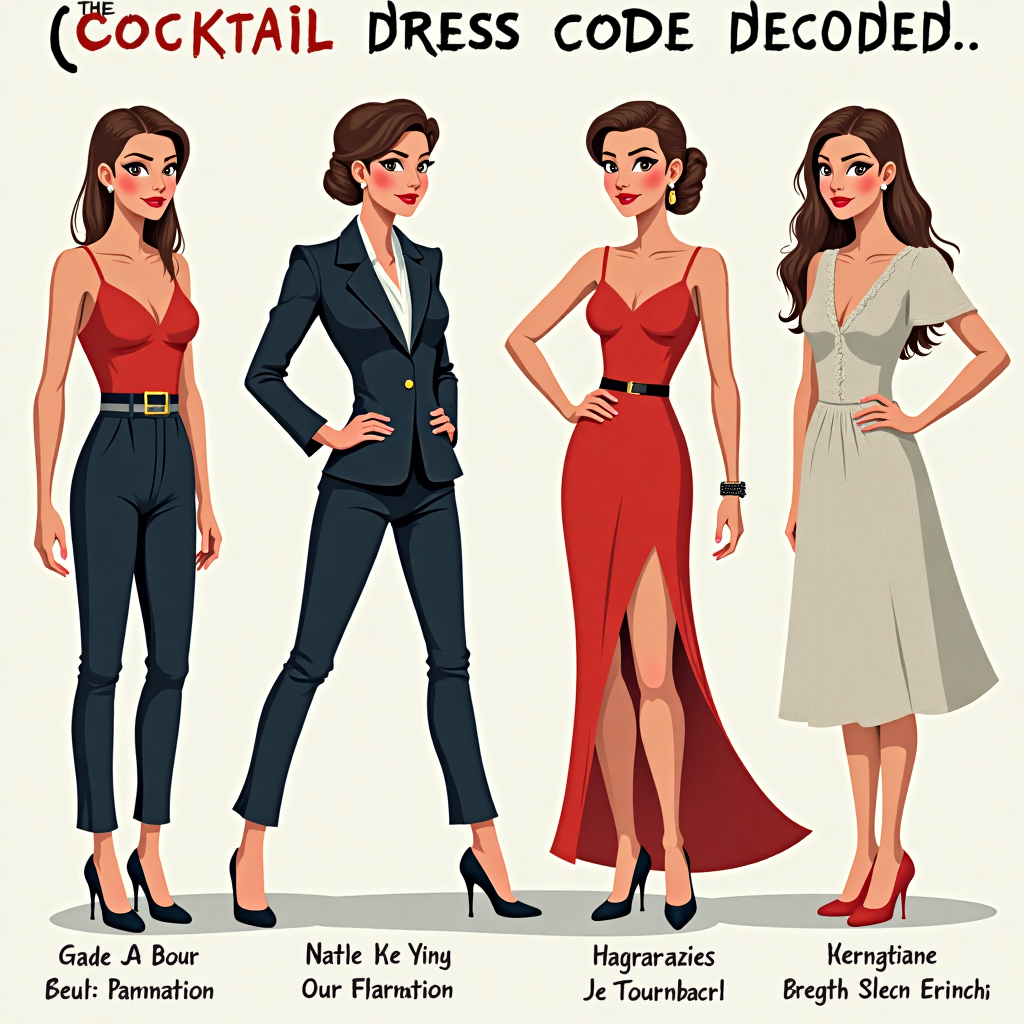
For women, cocktail attire offers a delightful array of options, allowing for significant creativity while adhering to the dressy standard.
The Cocktail Dress: The Quintessential Choice
The little black dress (LBD) is often hailed as the cornerstone of a woman’s cocktail wardrobe, and for good reason. Its versatility and timeless elegance make it a reliable choice. However, cocktail dresses come in a vibrant spectrum beyond black. Consider these elements:
- Length: The most defining feature is the length. Cocktail dresses typically fall above the ankle but below the knee – think knee-length, tea-length (mid-calf), or slightly above the knee. While midi lengths are hugely popular and often ideal, a tasteful mini dress (not too short) can also work for certain events and personal styles. Avoid full-length gowns unless the invitation suggests “Formal Cocktail” or “Black Tie Optional.”
- Silhouette: Options abound! Sheath dresses offer sleek sophistication, fit-and-flare styles provide flirty charm, A-line cuts are universally flattering, and wrap dresses add effortless elegance. Choose a silhouette that complements your body type and makes you feel confident.
- Fabrics: Opt for fabrics that convey luxury and refinement. Think silk, satin, chiffon, lace, velvet (especially in cooler months), high-quality jersey, brocade, or crepe. Avoid overly casual fabrics like denim, terry cloth, or flimsy cotton.
- Details and Embellishments: This is where you can add personality. Sequins, beading, lace overlays, strategic cut-outs, interesting necklines (like off-the-shoulder, one-shoulder, or a tasteful plunging V), and elegant ruffles can elevate a simple dress. The key is balance – one statement element is often enough.
Stylish Separates: Beyond the Dress
Cocktail attire isn’t exclusively about dresses. A well-coordinated separates outfit can be equally chic and appropriate:
- Elegant Tops: Pair a sophisticated blouse (silk, satin, lace, embellished) with tailored trousers or a sleek skirt. A structured, dressy jumpsuit is also an excellent modern alternative to a dress.
- Skirts: Pencil skirts, A-line skirts, or tastefully layered skirts in luxurious fabrics (silk, satin, velvet) work beautifully. Length should generally align with cocktail dress lengths (knee-length to midi).
- Trousers: Tailored dress pants in silk, crepe, or a fine wool blend are perfect. Wide-leg or elegant palazzo pants can create a stunning look. Avoid business-suit trousers or casual chinos.
Bottoms:
Finishing Touches: Shoes, Accessories, and Grooming
Accessories complete the cocktail look and add polish:
- Shoes: Heels are the standard choice – pumps, strappy sandals, or elegant ankle boots (in cooler weather). Opt for dressy materials like patent leather, satin, or metallics. While stylish flats (like embellished loafers or dressy mules) *can* sometimes work for a more modern interpretation, heels are generally safer for achieving the desired level of sophistication.
- Bags: Choose a small to medium-sized clutch or an elegant evening bag. Avoid large tote bags or casual crossbody bags.
- Jewelry: This is the time for statement pieces or elegant classics. Consider chandelier earrings, a bold cocktail ring, a delicate necklace, or layered bracelets. Quality over quantity is key.
- Hair and Makeup: Aim for a polished appearance. Updos, sleek blowouts, or styled waves are common. Makeup should be more defined than daytime wear – think a bold lip, smoky eye, or perfected complexion. Manicured nails are a subtle but important detail.
Demystifying Men’s Cocktail Attire: Suits, Blazers, and Sharp Style
For men, cocktail attire requires a significant step up from business casual or everyday wear, focusing on sharp tailoring and refined details.
The Foundation: The Suit or Blazer
This is non-negotiable. Cocktail attire for men is built on tailored separates:
- The Dark Suit: A well-fitted suit in a dark color is the gold standard. Navy and charcoal grey are the most versatile and universally appropriate choices. Black is also acceptable but can sometimes edge towards more formal territory. Ensure the suit fits impeccably – shoulders should sit correctly, sleeves should show a hint of shirt cuff, and trousers should break cleanly on the shoe.
- The Smart Blazer Combination: If a full suit feels too formal for the specific event (or if the invitation specifies “Jacket Required”), a sophisticated alternative is a dark blazer paired with dress trousers. The key is that the trousers must not match the blazer. Think a navy blazer with grey trousers or charcoal trousers. The trousers should still be dressy – wool blends, well-pressed, and in a complementary but distinct color and fabric from the blazer. Avoid blazers with overly casual details like patch pockets or worn-in corduroy.
Avoid: Sport coats in very casual patterns (like loud plaids), khakis, chinos, or jeans. These are too informal.
Shirt, Tie, and Refined Details
What you wear under the jacket matters immensely:
- Dress Shirt: A crisp, clean dress shirt is essential. White or light blue are classic and safe choices. Pale pink or subtle patterns like fine stripes or checks can also work if executed well. Ensure the shirt is pressed and fits well (collar not too tight/loose).
- Tie (Usually): A tie is generally expected for traditional cocktail attire. Opt for silk ties in solid colors, subtle patterns (like small polka dots, stripes, or tasteful prints), or rich textures. Bow ties are less common for cocktail than for black-tie but can work if styled confidently. The “no tie” look with an open collar is becoming more acceptable, particularly at less traditional or more creative events, but it’s still safer to wear one unless you’re certain it’s appropriate. If going tieless, ensure the shirt is impeccably clean and crisp.
- Pocket Square: An optional but highly recommended element that adds a touch of personality and polish. Fold neatly and coordinate (don’t perfectly match) your tie or complement your outfit’s colors.
Footwear and Grooming: The Final Polish
Don’t let the details let you down:
- Shoes: Dress shoes are mandatory. Oxfords, Derbies (Brogues), or Monk Straps in black or dark brown leather are ideal. Ensure they are clean and polished. Avoid loafers unless they are exceptionally dressy (like patent leather or sleek, unadorned styles), sneakers, boots (unless elegant dress boots), or sandals.
- Socks: Choose dark, dress socks that match your trousers or shoes. Avoid athletic socks or loud patterns that distract.
- Grooming: Pay attention to personal grooming. A fresh haircut, trimmed facial hair (if applicable), and neat nails contribute significantly to a polished overall appearance.
Modern Interpretations and Navigating Grey Areas
While the traditional guidelines provide a solid foundation, fashion evolves, and context matters.
The Rise of “Creative” or “Festive” Cocktail
Some invitations might specify “Creative Cocktail” or “Festive Cocktail,” particularly around the holidays or for artistic events. This gives you more leeway to experiment:
- Women: Think bolder colors, more dramatic silhouettes, interesting textures (metallics, velvets), statement accessories, or unique jumpsuits. The length and overall polish should still align with cocktail standards, but the boundaries for patterns and embellishments expand.
- Men: This might allow for a suit in a richer color (like burgundy or emerald green), a subtly patterned blazer, a more adventurous tie or pocket square, or even high-quality, dark, non-denim trousers with a very sharp blazer. The emphasis is still on looking put-together and intentional.
Important: “Creative” doesn’t mean sloppy or overly casual. It means expressing individuality within the framework of dressy attire.
Cocktail vs. Semi-Formal vs. Black Tie Optional
These terms are sometimes used interchangeably or vaguely, causing confusion:
- Semi-Formal: This is often synonymous with cocktail attire, especially in the US. Assume it means cocktail unless the context suggests otherwise.
- Black Tie Optional/Formal Cocktail: This indicates an event that leans towards formality. Guests have the choice: wear a tuxedo or dark suit (for men), or a floor-length gown or a dressy cocktail dress (for women). When in doubt, err on the slightly dressier side.
Considering Time, Location, and Host
Always factor in:
- Time of Day: Evening events generally call for darker, more formal interpretations of cocktail attire. Afternoon events might allow for slightly lighter colors or fabrics.
- Venue: A gala at an art museum demands a different level of polish than a summer cocktail party in a garden. Adjust accordingly (e.g., lighter fabrics outdoors, more conservative attire in very formal settings).
- The Host’s Style: If you know the host tends towards classic elegance or modern flair, let that subtly guide your choices.
When truly unsure, it’s perfectly acceptable to politely ask the host or other guests for clarification. It’s better to ask than to be significantly under or overdressed.
Conclusion: Confidence is the Best Accessory
Understanding the cocktail dress code empowers you to navigate social events with ease. Remember its core principles: polished elegance, sophistication, and a step above everyday wear. For women, this typically means a chic dress or elegant separates in knee-length to midi styles with refined fabrics and accessories. For men, it translates to a well-fitted dark suit or sophisticated blazer-and-trouser combination, paired with a dress shirt, usually a tie, and polished shoes.
While guidelines are helpful, the most important element is confidence. Choose an outfit that adheres to the dress code but also makes you feel comfortable and self-assured. Pay attention to fit, fabric, and finishing touches. When you feel good in what you’re wearing, it shows. So, the next time you see “Cocktail Attire” on an invitation, take a deep breath. You’ve got this. Armed with this knowledge, you’re ready to step out looking effortlessly elegant and ready to enjoy the occasion.